Sherry Kennedy

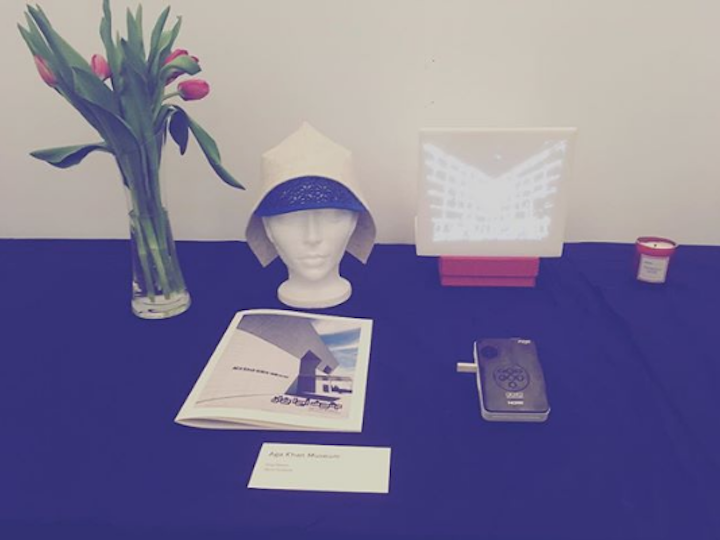
Aga Khan Museum: Book & Hat
Design

Photos I took for the book - Shape & Form

Photos I took for the book - Pattern & Texture

Photos I took for the book - Transparency & Reflection

Photos I took for the book - Hat Production Process

Book production flat-plan


Grid gi-qt-026 from Carsten Nicolai's book 'Grid Index'.

Sewing the pieces together in form of grid gi-qt-026 from Carsten Nicolai's book 'Grid Index'.

Juniper loving the softness of felt. Notice the laser cut brim for the hat referencing a similar grid pattern seen throughout the museum.


Aga Khan Museum: Book & Hat
Design
Design Theory/Interior Design project for Ryerson University, Winter 2017.
Instructor: Lucinda McGroarty
Collaborative learning through observational in situ- research, analysis and design synthesis of a randomly selected building/site in downtown Toronto.
Goal 1: Students utilize and deconstruct the elements and principles of their selected building to design the next season’s haut-couture chapeau (hat) for the final hat-walk. The hat design resembles the selected building but is not literal. Student utilizes the selected building as an inspiration and not as a model for reproduction.
Goal 2: Evidence of research in creating an innovative “value- added” pedagogical concept that is creatively integrated into the hat design and/or performance. Performance duration is 5 – 10 minutes. “Value-added” pedagogical examples: pedagogical relevance, sustainability, technology, societal relevance, etc.